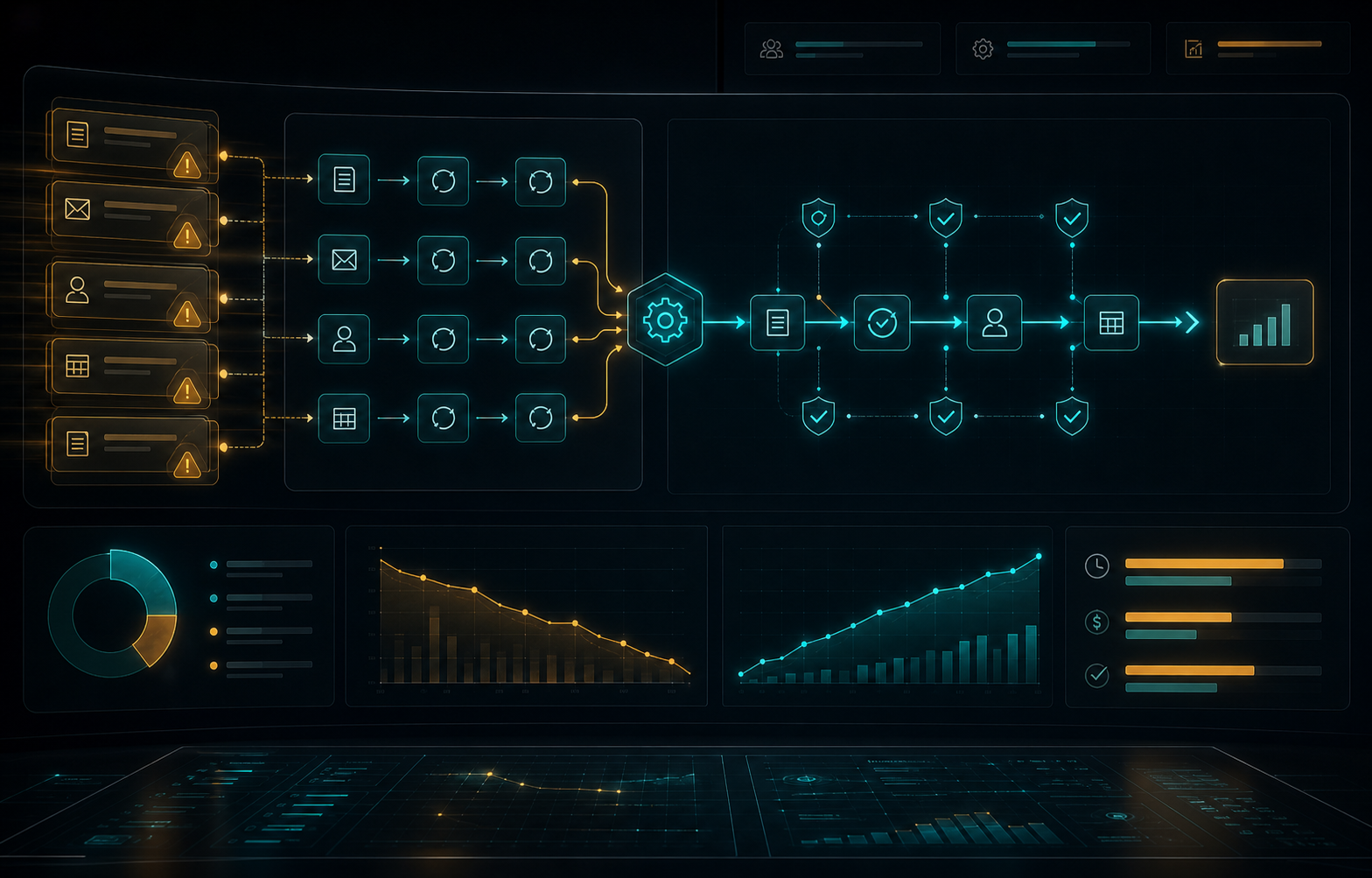

RAG connects a model with company knowledge sources
RAG lets a model use documents, procedures, knowledge bases, offers, manuals and case history. This makes answers based on concrete sources instead of only the model memory. It is especially useful in customer service, sales, HR, service operations and back-office work.
Document quality determines answer quality
Knowledge search will not automatically fix outdated, conflicting and scattered materials. Before implementation, sources of truth, document versioning, access rights and content tagging must be defined. Good results also require query tests, relevance evaluation and regular index updates.
Source citation builds trust
In business use, an AI answer should show which documents it relies on. Citations and links to sources let a human quickly verify correctness. This reduces error risk and helps deploy AI in processes where accountability, audit and procedure compliance matter.
Permissions must work before context is sent
Company RAG cannot behave like one shared library for everyone. The system should filter documents by roles, departments, customers, projects and access status before fragments reach the model. This is especially important for personal data, offers, contracts, margins and confidential documents.
Query tests reveal real quality
Before launch, prepare typical, difficult and tricky questions. The test should check not only answer wording, but also source relevance, lack of hallucination, answer language and behavior when information is missing. Without this evaluation, the company does not know whether the system helps or only generates confident answers faster.
The knowledge base needs an owner
The best index loses value when documents stop being current. The company should define who adds new materials, who retires old versions, how changes are tagged and how often result quality is checked. RAG is a knowledge maintenance process, not a one-time file import.