An integration needs a data owner
The key question is which system is the source of truth for a customer, order, document, status or payment. Without that decision, integration quickly becomes a data conflict. A good design defines synchronization direction, update rules, validation and conflict handling.
Retries, queues and alerts are part of the product
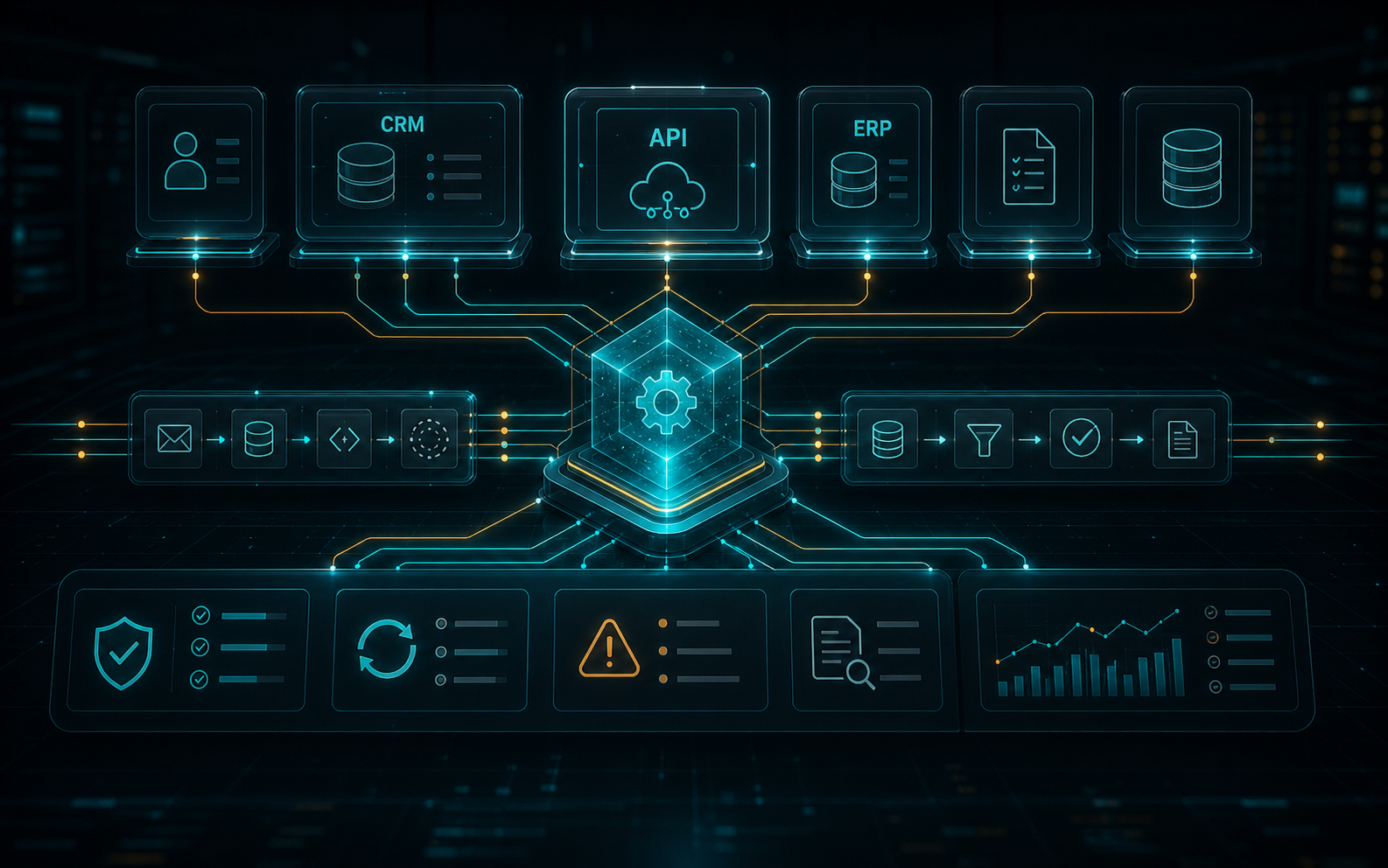
Integrations fail: an API is unavailable, data is incomplete, a token expires or a rate limit is exceeded. That is why production system connections need queues, retries, logs and alerts. Without them, errors reach people too late and the company returns to manual checking.
AI can use integrations, but not without control
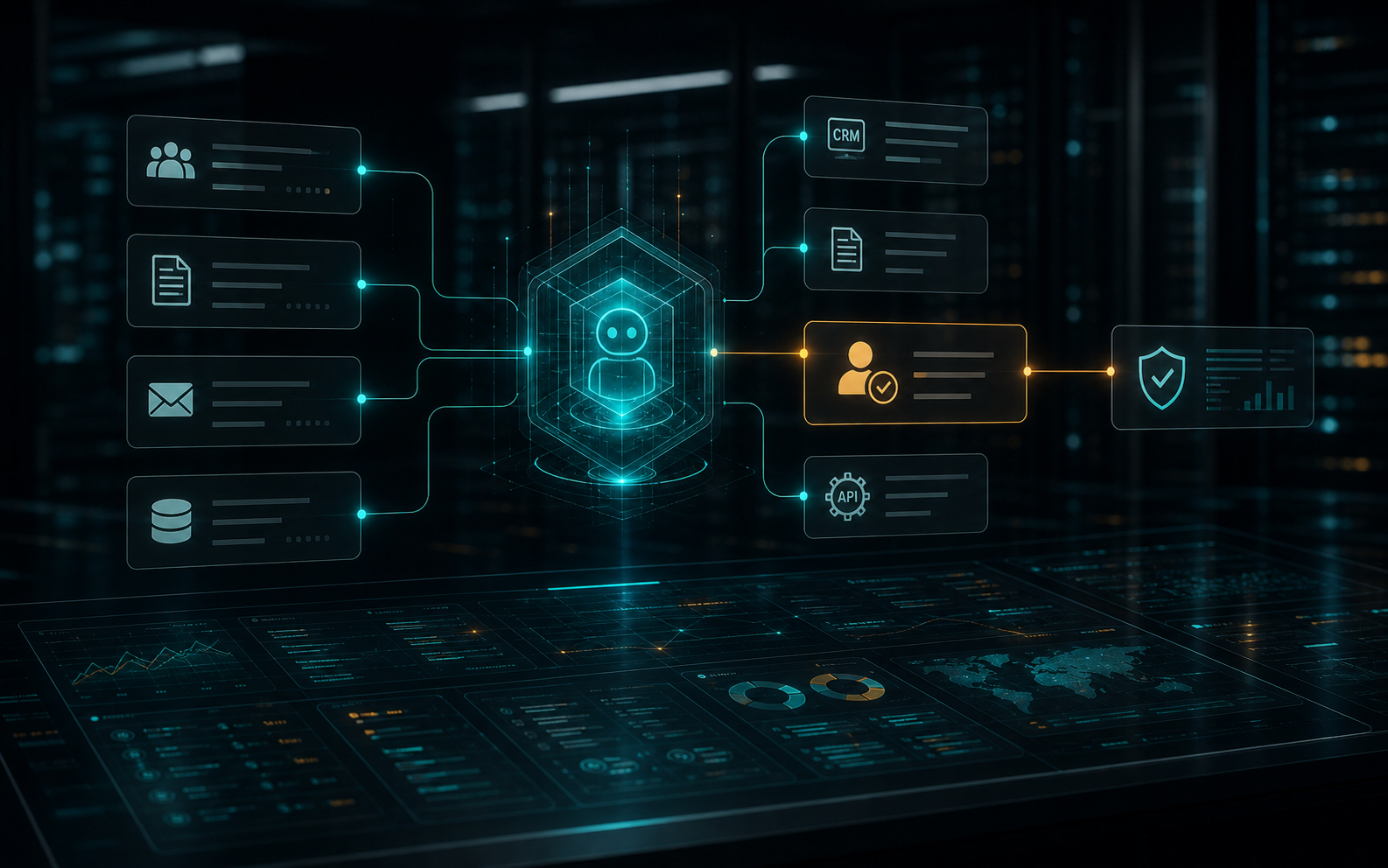
If an AI agent creates records, sends messages or changes statuses, integrations need constraints. Separate low-risk and high-risk actions, add approvals, store full decision context and make it possible to disable automation quickly when unusual errors appear.
A data contract protects against silent errors
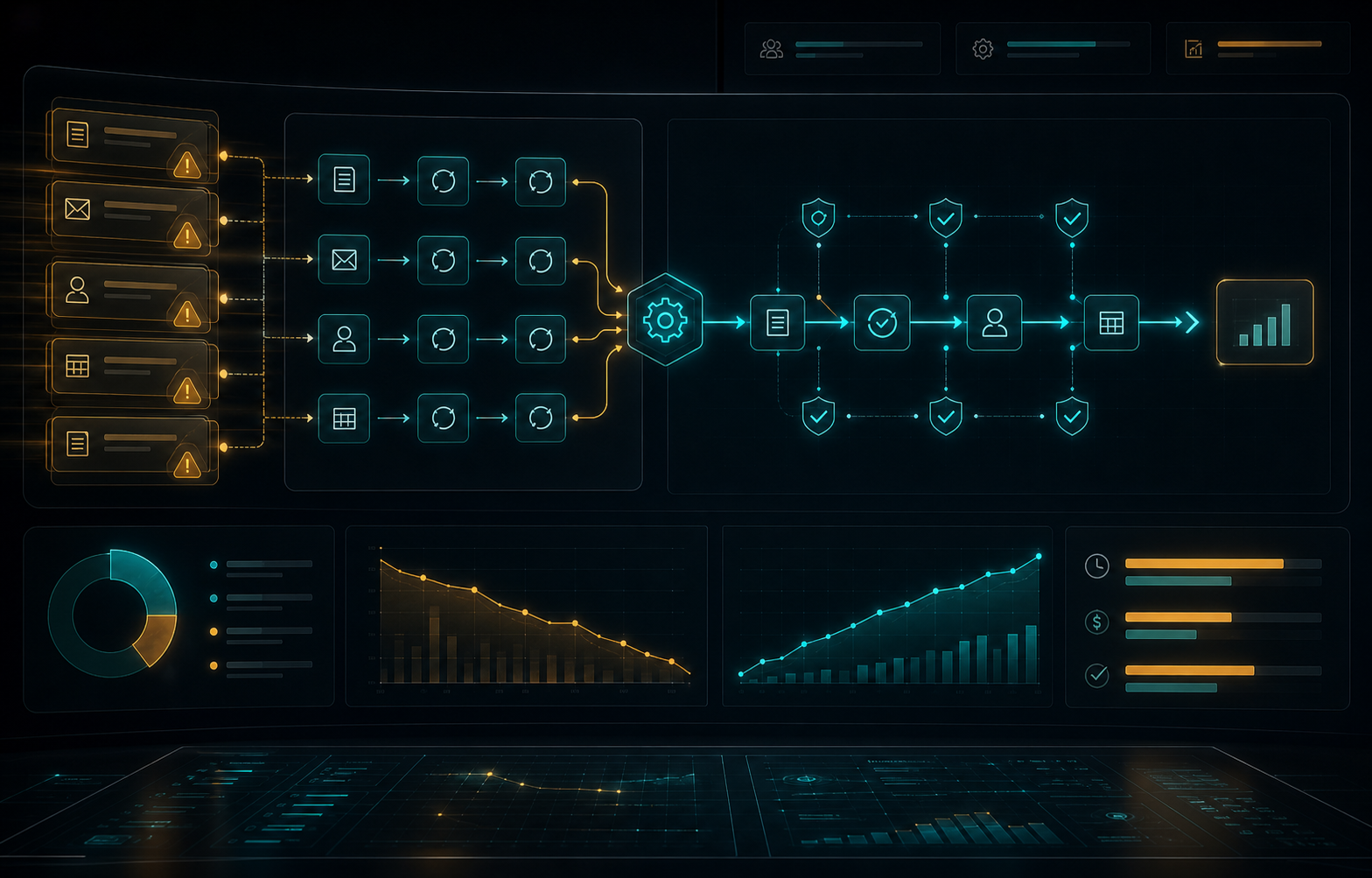
An integration should clearly describe required fields, data types, statuses, identifiers and transformation rules. If the CRM changes a stage name, the ERP returns a different date format or the shop sends an empty customer id, the system should detect the problem instead of saving wrong data and hiding it in reports.
Two-way sync needs conflict rules
Two-way synchronization is possible, but it needs rules: which system wins, what happens on simultaneous changes, how to mark a record for manual decision and how to avoid update loops. Without this, an integration can multiply errors faster than people can notice them.
A good integration gives operational visibility
The team should see which records passed, which are queued, which require data correction and where an API provider returns an error. A technical panel, alerts and a reprocessing procedure are as important as connecting endpoints because they keep the process running without manual tracking.